
Eight power supplies from budget 750W units to a 1000W flagship, and one uncomfortable fact behind the whole page: the most reviewed power supply in our entire search is not on this list. It has 4,375 ratings and it cannot natively power a current graphics card.
- The connector matters more than the wattage. ATX 3.1 and a native 12V-2×6 cable are the specification to read first.
- 750W covers most builds. Five of our eight picks are 750W and that is not a coincidence.
- Popularity is the worst signal on this page. The two most reviewed units here are both excluded, and we explain exactly why.
Choosing the best gaming power supply is the part of a build where the most money gets wasted in both directions at once. People overspend on wattage they will never draw, and underspend on the one specification that actually decides whether a modern graphics card will run without an adapter hanging out of it.
The eight units below run from budget 750W units to a 1000W flagship. All eight carry 80 Plus Gold or better, and one is additionally rated Cybenetics Platinum. Seven are fully modular and one listing declines to say. Every price, rating and review count was pulled from Amazon.
The single most important thing on this page is not a product. It is this: a power supply built before the ATX 3.1 standard can still be an excellent power supply, and still be the wrong one for your graphics card. That distinction is what separates the eight units below from the two best-selling ones we deliberately left out.
The eight power supplies at a glance
| Power supply | Watts | Efficiency | Cables | Modern connector | Price | Rating |
|---|---|---|---|---|---|---|
| CORSAIR RM750e | 750W | Cybenetics Gold | Fully modular | 12V-2×6 included | $89.99 | 4.6 (403) |
| MSI MAG A750GL PCIE5 | 750W | 80+ Gold | Fully modular | Native 12V-2×6 | $99.99 | 4.6 (1,501) |
| Thermaltake Toughpower GT | 850W | 80+ Gold | Not stated | 450W PCIe 5.1 | $89.99 | 4.5 (590) |
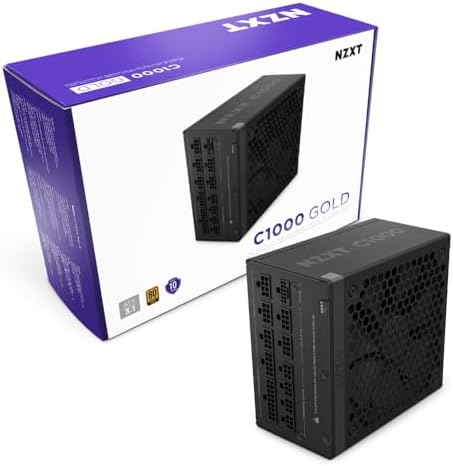
| NZXT C1000 Gold | 1000W | 80+ Gold | Fully modular | Not stated | $124.99 | 4.6 (324) |
| be quiet! Pure Power 13 M | 850W | 80+ Gold | Fully modular | 12V-2×6, 600W | $109.90 | 4.6 (202) |
| Cooler Master MWE Gold 750 V3 | 750W | 80+ Gold, Cybenetics Platinum | Fully modular | 12V-2×6 cable | $111.74 | 4.6 (154) |
| Thermaltake GF1 750W | 750W | 80+ Gold | Fully modular | Not stated | Check price | 4.6 (340) |
| Rosewill VMG 750W | 750W | 80+ Gold | Fully modular | 12V-2×6, PCIe 5.1 | $79.99 | 4.4 (217) |

| Capacity | 750W |
| Efficiency | Cybenetics Gold |
| Cables | Fully modular |
| Rating | 4.6 (403) |

| Capacity | 750W |
| Efficiency | 80+ Gold |
| Warranty | 10 years |
| Rating | 4.6 (1,501) |
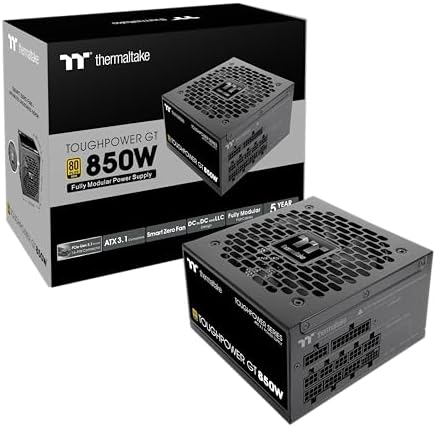
| Capacity | 850W |
| Efficiency | 80+ Gold |
| Connector | 450W PCIe 5.1 |
| Rating | 4.5 (590) |

| Capacity | 1000W |
| Efficiency | 80+ Gold |
| Cables | Fully modular |
| Rating | 4.6 (324) |

| Capacity | 850W |
| Efficiency | Up to 94.4% |
| Fan | Semi-passive 120mm |
| Rating | 4.6 (202) |

| Capacity | 750W |
| Efficiency | 80+ Gold |
| Noise | Cybenetics A |
| Rating | 4.6 (154) |

| Capacity | 750W |
| Efficiency | 80+ Gold |
| Cables | Fully modular |
| Rating | 4.6 (340) |
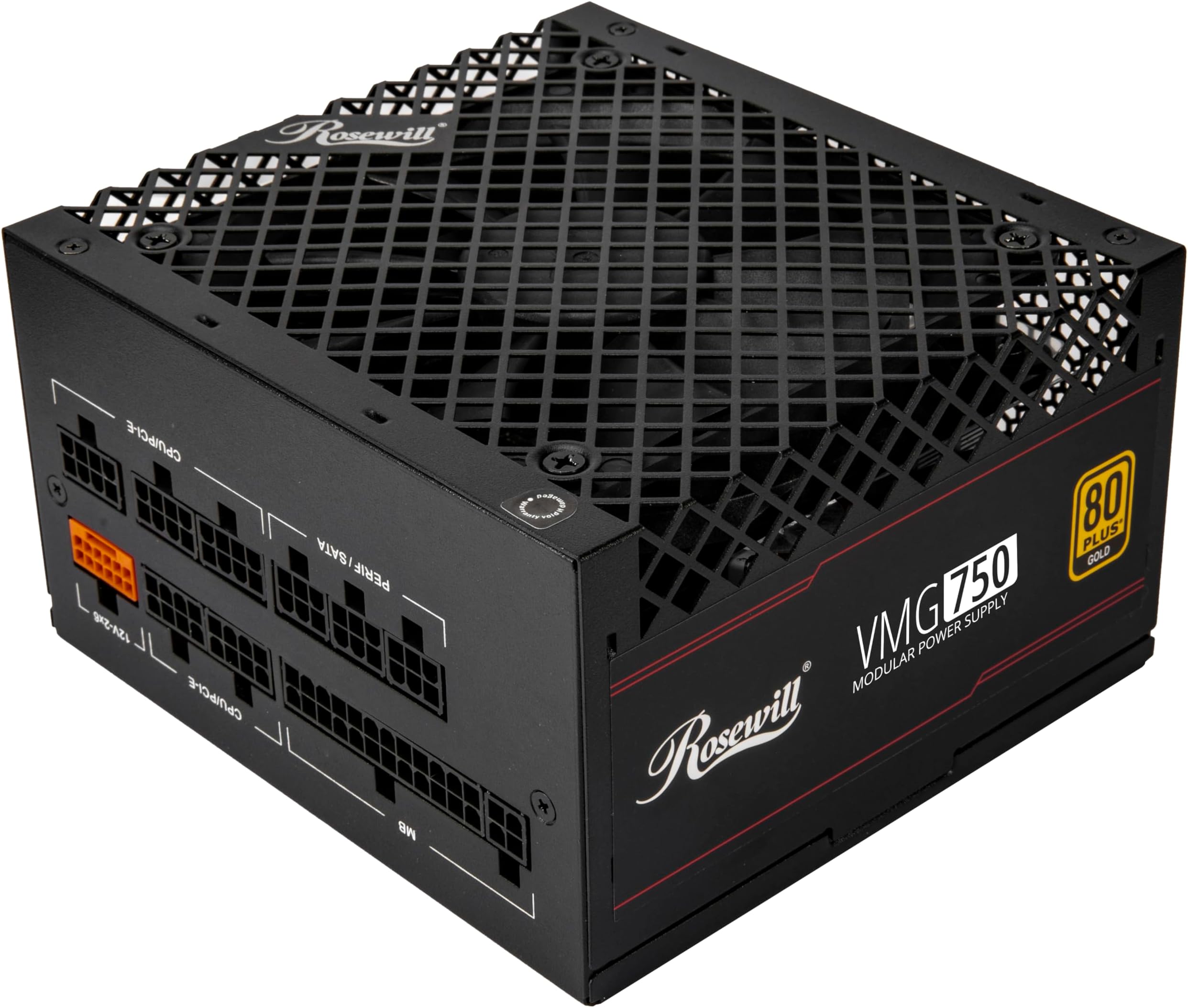
| Capacity | 750W |
| Efficiency | 80+ Gold |
| Cables | Fully modular |
| Rating | 4.4 (217) |
CORSAIR RM750e, the one to buy for most builds
- Fully Modular PSU: Reliable and efficient, low-noise power supply with fully modular cabling, so you only have to connec…
- Intel ATX 3.1 Certified: Compliant with the ATX 3.1 power standard, supporting PCIe 5.1 platform withstands 2x transient…
- Keeps Quiet: A 120mm rifle bearing fan with a specially calculated fan curve keeps fan noise down, even when operating a…
The RM750e is the unit we would put in the largest number of 2026 builds without thinking hard about it. It is ATX 3.1, it is PCIe 5.1 ready, it is fully modular, and critically the 12V-2×6 cable is in the box. That last point sounds trivial and is not. A power supply that supports the modern connector but ships without the cable leaves you buying one separately or using the adapter that came with your graphics card.
It uses 105°C-rated capacitors and supports Modern Standby, and it rates 4.6 stars across 403 ratings, among the highest scores here with a meaningful sample behind it.
One honest note on the badge. Corsair lists this as Cybenetics Gold, not 80 Plus Gold, and those are different certifications from different laboratories. It is not a downgrade, and we explain the difference further down, but it is a distinction most listings blur and most buyers never notice.
- The 12V-2×6 cable is included rather than sold separately
- 4.6 stars, the highest rating here
- Fully modular, so unused cables never enter the case
- 105°C-rated capacitors, the specification that governs lifespan
- Cybenetics Gold is not the same badge as 80 Plus Gold, and buyers conflate them
- 403 ratings is respectable but well short of the MSI below
- 750W caps which graphics card you can sensibly pair with it
MSI MAG A750GL PCIE5, a long track record
- 80 PLUS GOLD CERTIFIED
- 10-year limited warranty, guaranteeing long term reliable operation
- Fully modular design
With 1,501 ratings at 4.6 stars, this has a long track record for a modern power supply. Every other ATX 3.1 unit here is measured in the hundreds or the dozens. When you are buying a component whose failure can take other components with it, sample size is not a vanity metric.
It is 80 Plus Gold, fully modular, ATX 3.1 and PCIe 5.1 ready, with a native dual-color 12V-2×6 cable and a ten-year warranty. It is also compact, which matters more than people expect in smaller cases.
This is the power supply in our $2,000 gaming PC build, and it is there for the same reasons it is here.
- 1,501 ratings, roughly three times the next-largest modern sample
- Ten-year warranty, matched only by the be quiet! unit
- Native 12V-2×6 cable, not an adapter
- Compact body suits mid-tower and smaller builds
- 4.6 rather than 4.7, a hair behind the Corsair at the same price
- 750W is the ceiling, so a flagship card needs something larger
- No noise certification published, unlike the Cooler Master
Thermaltake Toughpower GT 850W, the step up to 850W
- ATX 3.1 and PCIe 5.1 Support: Fully compatible with Intel ATX 3.1 specifications, with native PCIe 12V-2×6 (12+4 pin) co…
- 80 PLUS Gold Efficiency: Provides up to 90% efficiency, reducing energy consumption and heat output during operation.
- Smart Zero Fan Technology: Automatically adjusts fan speed based on load, minimizing noise during low-load operations.
Eight hundred and fifty watts of 80 Plus Gold for under eighty dollars is the best raw capacity-per-dollar on this page, and it comes with a Smart Zero Fan mode that stops the fan entirely under light load. At 590 ratings and 4.5 stars, the sample is solid.
There is one caveat and it is a real one. The listing specifies a native 450W PCIe 5.1 connector, not a 600W one. For a card that draws inside that envelope this is a non-issue. For a flagship that expects the full 600W down a single cable, it is a hard limit, and it is the reason this is our value pick rather than our overall pick.
The listing also describes it as a Standard unit and never uses the word modular, so plan for fixed cables unless the retailer page says otherwise.
- 850W of 80 Plus Gold for less than most 750W units cost
- Smart Zero Fan stops the fan completely at low load
- 590 ratings, a healthy sample for a recent unit
- ATX 3.1, so the modern standard is covered
- The PCIe 5.1 connector is rated 450W, not the full 600W
- The listing never states that it is modular
- Five-year warranty, half what MSI and be quiet! offer
NZXT C1000 Gold, for genuinely high-end cards
- ATX 3.1 — Compliant with the ATX 3.1 standard to fuel high-performance PC components with stability, efficiency, and pow…
- 40 SERIES READY — Durable, heat-resistant 12V-2×6 connector pumps up to 600 watts to NVIDIA GeForce RTX 40 Series graphi…
- HIGH EFFICIENCY, LOW NOISE — Awarded certifications of 80 PLUS Gold Efficiency, Cybenetics Gold Efficiency, and Cybeneti…
The only four-figure unit here, and the only one we would pair with the most demanding cards in our best graphics cards guide. It is 80 Plus Gold, fully modular, PCIe 5 ready, and backed by a ten-year warranty — the longest on this page.
At 4.6 stars across 324 ratings it has a real track record behind it, which is more than most 1000W units on Amazon can offer. At $124.99 it is the most expensive unit here, and what you are buying is headroom rather than speed: a 750W supply will run almost every card in our guide, so step up to this only if you are fitting a flagship.
- 1000W, the only unit here with room for a flagship plus overhead
- 80 Plus Gold, with a ten-year warranty, the longest here
- Fully modular, which matters most in a densely packed case
- 4.6 stars across 324 ratings, a real sample
- You are paying for headroom most builds will never use
- The listing does not explicitly name a 12V-2×6 cable
- Most expensive unit on the page
be quiet! Pure Power 13 M 850W, the quiet one
- 80 PLUS GOLD & CYBENETICS PLATINUM: 80 PLUS Gold, Cybenetics Platinum, and Cybenetics A++ certify high energy efficiency…
- FUTURE-PROOF YOUR SYSTEM: Pure Power 13 M 850W is an ATX 3.1 PSU and comes with both native integration of the 12V-2×6 c…
- THE NEW STANDARD OF POWER: Pure Power 13 M offers 850W of continuous power with one massive 12V rail. Even if the graphi…
If the machine lives on your desk rather than under it, this is the one. A semi-passive 120mm fan means no fan noise at all below a load threshold, and be quiet! has built its entire reputation on that behavior.
It is also the only unit here that states the full 600W on its 12V-2×6 connector, which resolves the exact limitation we flagged on the Thermaltake. Add LLC topology, a claimed efficiency of up to 94.4 percent, and a ten-year warranty, and the $109.90 starts to look reasonable rather than steep.
Treat the 94.4 percent as a peak figure at an ideal load point, not an average you will see day to day. Every manufacturer quotes efficiency the same optimistic way.
- The only pick that states a full 600W on the modern connector
- Semi-passive fan, so it is silent under light load
- Ten-year warranty
- 4.6 stars from 202 ratings
- $109.90 is among the dearer picks here
- The 94.4 percent efficiency figure is a peak, not a typical value
- 202 ratings is a moderate sample
Cooler Master MWE Gold 750 V3, the certified pick
- Designed For Durability: The MWE Gold V3 sets a new benchmark for durability and efficiency, now with ATX 3.1 support.
- 90° Durable Cables: Featuring a 90° 12V-2×6 PCIe 5.1 connector, for improved electrical durability and safety.
- ATX 3.1 Cables: The ATX 3.1 delivers up to 450W power to your GPU.
This unit carries more independent certification than anything else here: 80 Plus Gold, Cybenetics Platinum, and a Cybenetics Noise A rating. That last one is the interesting one, because noise is the specification manufacturers are least often willing to have measured by somebody else.
It is ATX 3.1, fully modular, ships a 12V-2×6 cable, and has a Zero-RPM silent mode.
The reservation is the sample: 4.6 stars from just 154 ratings. That is a good score, but it is the thinnest evidence base on this page, which is worth noting rather than glossing over.
- Three independent certifications, including measured noise
- Fully modular with a 12V-2×6 cable
- Zero-RPM mode for silent light-load operation
- 4.6 stars, in line with the rest of this page
- 154 ratings is the thinnest sample here
- The listing does not state a warranty length
Thermaltake GF1 750W, the budget fully modular

- 80Plus Gold certified and Intel C6/C7 state and ErP Ready
- Smart Zero Fan: minimizes undesired noise
- Ultra quiet 140mm fluid bearing fan
This is a fully modular Gold unit rated 4.6 from 340 ratings, with a 140mm fluid-bearing fan and a zero-RPM mode that keeps it silent under light load. For a mid-range card on a tight budget it is a sensible, unexciting choice, which is what a power supply should be.
Read this part carefully. The listing is 80 Plus Gold and fully modular, but it names neither ATX 3.1 nor a 12V-2×6 cable. It is the only one of our eight that does not. If your graphics card wants the modern connector, expect to use the adapter that came in the card’s box. That is not automatically a problem, but it should be a deliberate decision rather than a surprise.
- Fully modular Gold
- 4.6 stars from 340 ratings
- Zero-RPM mode, so it is silent under light load
- Every cable detaches, unlike the semi-modular units
- The listing names neither ATX 3.1 nor a 12V-2×6 cable
- 340 ratings is a moderate sample for a power supply
- No PCIe 5.1 cable in the box, so plan on the adapter
Rosewill VMG 750W, the cheapest way to a modern connector
Seventy-nine dollars and ninety-nine cents for 80 Plus Gold, ATX 3.0 and 3.1, PCIe 5.1 and a 12V-2×6 cable, fully modular, is the cheapest route to the modern connector on this page. The listing rates it for 235 percent power excursion and 300 percent on the GPU rail, which is exactly what those standards exist to cover.
Two things temper that. First, 4.4 stars is the lowest rating on this page, and 217 ratings is a modest sample beside the four-figure counts behind the Corsair and the MSI. Second, Rosewill is a value brand rather than a first-tier one, so the service operation behind the warranty is not in the same class as Corsair or be quiet!.
For a budget build that needs the 12-pin connector without reaching for an adapter, it is the cheapest honest route on this page.
- 80 Plus Gold with ATX 3.1 and a 12V-2×6 cable at $79.99
- Fully modular at the lowest price on this page
- 235 percent power excursion, 300 percent on the GPU rail
- Roughly 9.4 watts per dollar, the best ratio here
- 4.4 stars, the lowest rating among our eight
- 217 ratings is a modest sample for a power supply
- Rosewill is a value brand rather than a first-tier one
How many watts do you actually need
Most builders buy too many. The graphics card is the single largest consumer in a gaming PC by a wide margin, and everything else, the processor included, is a rounding error next to it. That is why five of our eight picks are 750W: it is the capacity that comfortably covers the mid-range and upper-mid-range cards most people actually buy.
The right way to size a power supply is to start from the card. Look up the manufacturer’s recommended system wattage for the specific model in our graphics card guide, then buy at or slightly above it. Headroom beyond that buys you nothing except a unit running at a less efficient point on its curve.
A 1000W unit in a machine drawing 400W is not safer or faster. It is a more expensive way to draw 400W. The only reasons to buy well above your need are a planned upgrade to a much larger card, or a specific flagship that genuinely asks for it.
80 Plus, Cybenetics, and what the badges actually promise
80 Plus is the badge everyone recognizes and it runs White, Bronze, Silver, Gold, Platinum, Titanium. It certifies efficiency, meaning how much of the power drawn from the wall reaches your components rather than leaving as heat. A Gold unit wastes less than a Bronze one, which means a slightly lower power bill and slightly less heat in the room.
Efficiency is not the same thing as quality, and this is where the badge misleads people. An 80 Plus rating says nothing about ripple, voltage regulation, protection circuitry, or how the unit behaves when something goes wrong. Those are the properties that decide whether a failing power supply takes your motherboard with it.
Cybenetics is the reason two of our picks carry an unfamiliar badge. It is an independent laboratory that tests across a wider range of load conditions than 80 Plus does, and it publishes a separate noise rating as well. When a manufacturer puts a Cybenetics figure on the box it usually means they were willing to be measured more thoroughly than the minimum. Cybenetics Platinum on the Cooler Master is a meaningful signal, not marketing garnish.
The 12V-2×6 connector matters more than the wattage number
This is the specification to read first, and it is the one buried furthest down most listings. Modern high-power graphics cards feed from a single dense connector rather than two or three old-style eight-pin plugs. That connector went through a troubled first generation and was revised; the current form is called 12V-2×6, and a power supply built to the ATX 3.1 standard provides it natively.
If your power supply does not have it, your card almost certainly came with an adapter that converts several eight-pin cables into one. Those adapters work. They also add a bulky junction right where cases have the least room, and they concentrate the entire card’s draw through a connector that must be fully seated to be safe. A native cable removes an entire category of failure that an adapter reintroduces.
Seven of our eight picks state ATX 3.1. Five name a 12V-2×6 cable outright, one states a 450W PCIe 5.1 connector, and two do not mention the connector at all. If you are buying a card that uses it, buy a supply that ships the cable.
Fully modular, semi-modular, and fixed cables
Fully modular means every cable detaches, so only the ones you need go into the case. Semi-modular fixes the motherboard and processor cables and detaches the rest. Non-modular attaches everything permanently, and the ones you do not use have to be stuffed somewhere.
This is a build-quality and airflow question rather than a performance one. In a large case with a solid side panel, a semi-modular or non-modular unit is fine and saves real money. In a compact case, or any case with a glass panel, the difference between a clean build and an ugly one is often just this, which is why every unit we kept this time detaches its cables.
Our split: seven fully modular, and one listing that never says. Cable management interacts with case choice more than any other component pairing, which is worth keeping in mind alongside our best gaming motherboards 2026 guide when you plan the layout.
The most reviewed power supply on Amazon is not on this list
The Thermaltake Smart 700W has 4,375 ratings at 4.6 stars and costs $54.99. It is, by review volume, the most popular unit our searches returned by a factor of more than three. We are not recommending it, and the reason is worth spelling out because it is the single most useful thing on this page.
It is 80 Plus White, the entry rung of the efficiency ladder rather than Gold. It is non-modular. And its listed standard is ATX 12V V2.3, a specification generation that predates the modern connector entirely. It cannot natively power a card that expects 12V-2×6, because that connector did not exist when this unit was designed.
None of that makes it a bad power supply. Thousands of people are running it happily, and for an older card or a light build it is perfectly serviceable. But those 4,375 ratings accumulated over roughly a decade, and they are answering a question about a different era of hardware than the one you are buying into. Review count measures how long something has been on sale at least as much as it measures how good it is.
The second exclusion is the ARESGAME AGV750 at $49.99, 4.4 stars from 1,117 ratings. It is semi-modular and 80 Plus Bronze with a five-year warranty, and it is cheaper than our budget pick. We left it out because our cheapest Gold unit gives you better efficiency, ATX 3.1 and the modern cable for thirty dollars more, and once those are on the table the Bronze unit stops making sense.
How we chose these eight
Every unit here was pulled from live Amazon search results, then validated individually against the retailer page for price, rating, review count and availability. Products that failed validation were dropped rather than estimated.
We deliberately spanned the range rather than stacking the list with premium units: 750W to 1000W, Gold through Platinum-certified, and fully modular throughout. A guide where every pick costs a hundred dollars is not a guide, it is a shortlist for one buyer.
One consistency note, because we would rather raise it than have you find it. Our $1,000 budget build uses a Corsair CX750, which is not among the eight here. That is deliberate. The CX750 predates ATX 3.1, and the card in that build draws its power through a conventional eight-pin connector and will never ask for 12V-2×6. Buying the modern standard for a machine that cannot use it would have added cost for nothing. The connector matters when your card needs it, and not before.
The rest of that machine is costed the same way, part by part, if you want to see the reasoning applied end to end. The same is true of the $2,000 build, which uses the MSI unit ranked second here.
Frequently asked questions
How many watts does my gaming PC need?
Start from the graphics card, not the total build. Look up the manufacturer’s recommended system wattage for your exact card model and buy at or a little above it. For most mid-range and upper-mid-range cards that lands on 750W, which is why five of our eight picks are 750W units.
What is the 12V-2×6 connector and do I need it?
It is the single dense connector modern high-power graphics cards use instead of multiple eight-pin plugs, and a power supply built to ATX 3.1 provides it natively. You need it if your card uses it. If your card ships with an eight-pin adapter you can use that instead, but a native cable is tidier and removes a connection point.
Is 80 Plus Gold worth paying for over Bronze?
Usually yes, though not for the reason people assume. The electricity saving is small. The practical benefit is that Gold units are generally built with better components and run cooler and quieter as a result. In our lineup every unit is Gold or better and the cheapest costs $79.99, so the premium over a Bronze unit is usually small.
What is Cybenetics and how is it different from 80 Plus?
Cybenetics is an independent testing laboratory that measures efficiency across a wider range of load conditions than 80 Plus, and also publishes a separate noise rating. A Cybenetics Platinum badge, which one of our picks carries, generally reflects more thorough testing than an 80 Plus badge alone.
Does a more efficient power supply make my PC faster?
No. Efficiency describes how much power is lost as heat between the wall and your components. A more efficient unit runs cooler and costs slightly less to run, but it delivers no additional performance. Buying Gold over Bronze is a longevity and noise decision, not a speed one.
Is a modular power supply worth the extra money?
It depends entirely on your case. In a compact case or one with a glass side panel, fully modular makes the difference between a clean build and a cluttered one. In a large case with a solid panel, non-modular is perfectly fine and saves money, which is the trade our cheapest pick makes.
Can I use my old power supply with a new graphics card?
Often, provided it has enough capacity and the right connectors. The two things to check are the manufacturer’s recommended wattage for the new card, and whether the card needs 12V-2×6. If it does and your unit predates ATX 3.1, you will be relying on the adapter in the card’s box.
How long should a power supply last?
Longer than most other components, which is why warranty length is a useful proxy for a manufacturer’s own confidence. Two of our picks carry ten-year warranties and several carry five. Capacitor quality matters here too, which is why capacitors rated to 105 degrees Celsius get mentioned on better units.
Is the most reviewed power supply on Amazon a safe buy?
Not necessarily, and this is the most useful thing on this page. The most reviewed unit in our searches has 4,375 ratings but is 80 Plus White, non-modular, and built to a standard that predates the modern graphics card connector. Review count reflects how long a product has been on sale at least as much as how good it is.
The bottom line
There is no single best gaming power supply, only the right capacity and the right connector for the card you are pairing it with. That said, for most builds, buy the CORSAIR RM750e. It is ATX 3.1, fully modular, and it puts the 12V-2×6 cable in the box rather than making you find one. If you would rather have the longest track record, the MSI MAG A750GL PCIE5 costs the same and has almost four times the ratings behind it.
If money is tight, the Rosewill VMG at $79.99 delivers Gold efficiency, the modern connector and fully modular cables for less than anything else here. If your machine sits on the desk beside you, pay the extra for the be quiet! Pure Power 13 M.
And whatever you buy, size it from your graphics card rather than from a number that sounds reassuring. The rest of the build is costed the same way in our $2,000 build and $1,000 build, and the components that draw the power are covered in our graphics card, processor and motherboard guides. If you are still deciding whether to build at all, our prebuilt gaming PC guide covers the alternative.
Prices and ratings on this page update automatically. Every other figure was accurate when this guide was last reviewed and carries no guarantee beyond that. Component prices move quickly. Check each one before you buy.
The supply has to live somewhere, and the case decides how tidy that is. Shroud design, cable routing and whether the unit mounts fan-up or fan-down all come from the chassis rather than the power supply. Our best PC case guide covers eight from $54.99 to $124.99, including two built for back-connect motherboards.
Our $3,000 build fits the RM750e above, and the reasoning there is worth repeating here: a $3,000 machine does not need a four-figure power supply. Size the unit from the graphics card. A 1000W unit would have cost $25.00 more and delivered nothing but a supply running further from its efficient load point.
Not sure which capacity your build actually calls for? Our guide to what PSU wattage you need matches each tier to the graphics cards that need it, and explains why an undersized unit reboots the machine rather than failing outright.
Gamers Tech Guide participates in the Amazon Services LLC Associates Program. As an Amazon Associate we earn from qualifying purchases.